

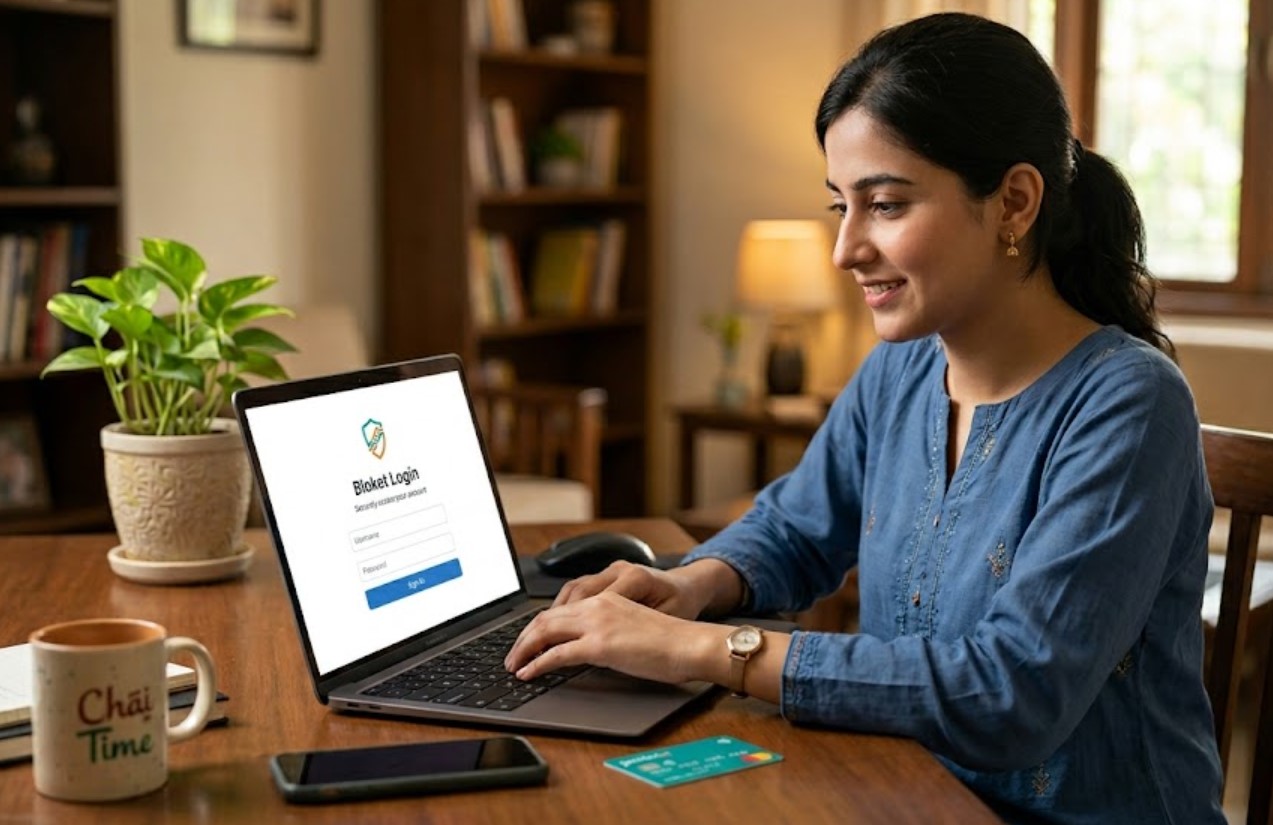
If you have ever sat in front of a classroom with thirty curious faces waiting to play a quiz, you already know that the bloket login screen is the door between chaos and a perfectly engaged lesson. Whether you are a teacher setting up a review session, a student joining your first game, or a parent helping a child at home, getting past that login screen smoothly is the difference between a great learning experience and ten frustrating minutes of “it’s not working.” This in-depth guide walks you through every method of signing in to Blooket, explains what to do when something goes wrong, and shares the practical tips I’ve picked up after using the platform across dozens of classroom sessions.
Blooket has quietly become one of the most loved gamified learning tools in the world, and the bloket login process is the gateway to its full library of game modes, custom question sets, progress tracking, and reward systems. By the end of this article, you will know exactly how to log in on any device, recover a forgotten password in under five minutes, switch between teacher and student accounts, and avoid the common mistakes that cost real classroom time.
What Is Blooket and Why Does the Login Matter?
Blooket is a web-based educational platform that turns ordinary quizzes into multiplayer games. Teachers create or import question sets, host live sessions, and students join using a short game code. The platform combines classroom assessment with the dopamine of casual mobile gaming, which is why it spreads through schools faster than most edtech tools.
The bloket login is more than a security checkpoint. Once authenticated, your account stores your custom question sets, tracks the Blooks (collectible characters) you have unlocked, saves your game history, and gives teachers access to the host controls and student reports. Without logging in, you can join a single game as a guest, but you lose everything the moment the session ends. That is why every regular user eventually creates an account, and why understanding the login flow well is genuinely useful.
Who Needs a Blooket Account?
You should create a Blooket account and use the bloket login regularly if you fall into any of these groups:
- Teachers and educators who want to host games, build question sets, and monitor student performance over time.
- Students who want to save their Blook collection, earn tokens, and track personal progress across multiple sessions.
- Homeschool parents and tutors who use Blooket as a structured review tool for one or more learners.
- School administrators managing district-wide subscriptions or Blooket Plus group plans.
If you only ever join games occasionally as a one-time participant, you technically do not need an account, but you also miss the personalization that makes the platform fun beyond a single class period.
The Official Bloket Login Page: How to Find It Safely
Before walking through the steps, a quick word on safety. The internet is full of look-alike domains that mimic popular education platforms in the hope of harvesting passwords. The only correct address for Blooket is blooket.com, and the dedicated authentication page lives at id.blooket.com. Anything with extra characters, hyphens, or unusual extensions should be treated as suspicious.
The simplest habit is to bookmark the homepage in your browser after your first successful bloket login. Every device you regularly use should have that bookmark, and you should rely on it instead of typing the URL each time. This single habit prevents the most common cause of compromised education accounts, which is mistyping a domain and landing on a phishing clone.
Recognising the Real Login Page
When you arrive at the genuine Blooket site, you will see the familiar yellow and dark navy branding, a clear “Log In” button in the top right corner, and a separate “Sign Up” option next to it. The login form itself asks only for an email or username and a password, plus offers a “Sign in with Google” button. Any page asking for your phone number, payment information, or unusual personal details during a basic login is not Blooket.
Step-by-Step: How to Complete the Bloket Login
The standard bloket login takes less than thirty seconds on a typical connection. Here is the full sequence, written for someone using the platform for the first time.
Step 1: Open Your Browser and Visit Blooket
Launch your preferred browser. Blooket works reliably on Chrome, Firefox, Safari, and Edge, with Chrome being the smoothest choice on Chromebooks (which dominate American classrooms). Type blooket.com into the address bar or click your saved bookmark. The homepage will load with the main navigation visible at the top.
Step 2: Click the Log In Button
Look at the top right corner of the homepage. You will see two buttons side by side: “Sign Up” and “Log In.” Click Log In. The page will transition to the dedicated authentication form. On mobile devices, the buttons may be inside a hamburger menu represented by three horizontal lines, so tap that first if you do not immediately see the options.
Step 3: Choose Your Login Method
Blooket gives you two main ways to authenticate. The form shows an email field, a password field, and a “Sign in with Google” button beneath them. Pick the same method you used when you originally created the account. If you signed up with Google, click the Google button; if you signed up with an email and password, enter them in the fields. Mixing the two is the single biggest source of failed login attempts, which we will address in the troubleshooting section.
Step 4: Enter Your Credentials
For the email and password method, type your registered email address (not your display name) and the password you set during sign-up. Passwords are case sensitive, so check that caps lock is off. If you check the “Remember me” option, your browser will keep you signed in on that device for up to thirty days, which is perfect for a personal home computer but a bad idea on shared classroom hardware.
Step 5: Land on Your Dashboard
Once you press the Log In button or finish the Google flow, you arrive at your personal Blooket dashboard. Teachers see options to create new sets, host games, view past sessions, and access reports. Students see their Blook collection, tokens, daily rewards, and a button to join a game using a code. This dashboard is where the rest of your Blooket experience takes place, and you can always return to it by clicking the Blooket logo in the top left corner.
Bloket Login Using a Google Account
Most schools in 2026 have standardized on Google Workspace for Education, which makes the Google login flow the fastest and most reliable option for the bloket login. It also has practical security advantages: if your school enforces two-factor authentication on Google accounts, that protection automatically extends to your Blooket session without any extra setup.
To use this method, click the “Sign in with Google” button on the login page. A pop-up window opens listing the Google accounts already signed in on your device. Pick the school account associated with your Blooket profile, review the permissions Blooket is requesting (it only needs basic profile information), and click Continue. Within seconds you are inside your dashboard.
If your school account does not appear in the pop-up, you may need to add it to your browser first. On Chrome, this is done by clicking your profile icon in the top right of the browser window and selecting “Add account.” Once the school account is signed in at the browser level, return to the Blooket login page and the option will appear.
When Google Login Is the Right Choice
Choose Google authentication when any of the following apply: your school issues Google Workspace email addresses, you struggle to remember separate passwords for every site, you frequently use shared computers and want one fewer password to type, or your IT department has mandated single sign-on for security compliance. The trade-off is that you become dependent on your Google account staying active; if it gets disabled (for example, at the end of a school year), your Blooket access goes with it unless you have linked an alternate recovery method.
Bloket Login for Students: Joining a Game Without Signing In
One of the smartest design choices in Blooket is that students do not need a full account to join a single live game. This drastically lowers the barrier for classroom use, because no teacher wants to spend the first ten minutes of a lesson walking thirty children through account creation.
When the teacher starts a live session, Blooket displays a six-digit game code on the projector or shared screen. Students simply visit blooket.com, click the prominent “Join a Game” button on the homepage (it sits separately from the bloket login flow), enter the code, choose a nickname, and select a Blook character to represent them. They are in the game within fifteen seconds, no email required.
The limitation, of course, is that nothing carries over after the session ends. Any tokens earned or achievements unlocked vanish, the student appears as a guest in the teacher’s reports, and they cannot build a personal collection across multiple games. For a one-off review quiz this is fine; for regular use, students benefit from creating their own account and going through the proper bloket login each time.
Student Account Creation in Plain Language
Students who want a permanent account need an email address. Many schools provide one as part of Google Workspace, in which case the Google sign-up option is fastest. If a student is too young for their own email (common under age thirteen), parents should help create the account using a family email and supervise its use. The sign-up flow asks for a username, password, date of birth, and email, then sends a verification code to confirm the address is real.
Bloket Login for Teachers: The Full Workflow
Teacher accounts unlock the host controls, question set library, reporting dashboard, and (for paying customers) advanced features through Blooket Plus. The login itself is identical to the student flow, but what you can do after logging in is far broader, so it is worth understanding the dashboard layout.
After your bloket login, the left-hand navigation gives you access to Discover (a marketplace of teacher-created question sets), My Sets (your own creations), History (a record of past sessions with student results), and Settings. The top of the page also surfaces a prominent “Create a Set” button and a “Host” button that activates whichever question set you have selected.
A Sensible First-Time Teacher Setup
If you are setting up your teacher account for the first time, complete these tasks immediately after your first bloket login so you do not have to scramble later:
- Add a recovery email and phone number in Settings, so account recovery is straightforward if you ever get locked out.
- Connect your Google account even if you signed up with email and password, so you have a second login method as a safety net.
- Create one short test question set with three or four questions to familiarize yourself with the interface before going live in front of students.
- Bookmark the dashboard URL on your work laptop, your home machine, and any classroom desktops you use regularly.
- Review the Privacy Policy and Terms of Service, particularly the sections on student data, so you can confidently answer any parental questions.
Investing fifteen minutes upfront on these tasks saves hours of friction over a school year.
Bloket Login on Different Devices
Blooket is fully cross-platform, but each type of device has small quirks worth knowing about.
Desktop and Laptop Computers
Any modern desktop or laptop running an updated browser handles Blooket flawlessly. The full-size screen is ideal for teachers hosting games, because the host view shows real-time leaderboards, question previews, and student progress all at once. Performance is rarely an issue, but if you notice lag during a live game, close other tabs and disable browser extensions that intercept network traffic, such as aggressive ad blockers or VPNs.
Chromebooks
Chromebooks dominate K-12 classrooms in many countries, and Blooket runs natively in their Chrome browser. The bloket login experience is identical to standard Chrome, with the bonus that the school’s managed Google account often signs in automatically, skipping the credential prompt entirely. Make sure ChromeOS is up to date, because older builds occasionally have issues with the modern web standards Blooket relies on.
Tablets (iPad and Android)
On tablets, Blooket runs in any standard browser. Safari on iPad and Chrome on Android both work well. The interface adapts responsively, so the login form and dashboard look clean on a ten-inch screen. The one limitation is hosting: some advanced host controls require more screen real estate than a tablet provides, so teachers typically host from a laptop while students play on tablets.
Smartphones
Students often play Blooket on their phones during class with the teacher’s permission. The mobile experience is solid for joining games and answering questions, though the small screen is not ideal for creating question sets or reviewing reports. The login page itself is fully mobile-friendly, with large tap targets and proper keyboard behavior for the email and password fields.
Troubleshooting Bloket Login Problems
Even on a well-designed platform, login issues happen. Here are the most common bloket login problems I have seen across hundreds of classroom sessions, along with the fixes that actually work.
Problem 1: Forgotten Password
This is the most frequent issue, especially for accounts that have been dormant over a long school break. The fix is straightforward: on the login page, click the “Forgot Password?” link beneath the password field. Enter the email address tied to your account and submit. Within a few minutes, Blooket sends a reset link to that inbox. Click the link, choose a new password (at least eight characters with a mix of letters and numbers), and use it to log in again.
If the reset email never arrives, check the spam folder first, because automated security emails often land there. If it is still missing, you may have signed up with a different email than you remember. Try any alternate addresses you commonly use. Persistent inability to recover suggests the account may have been created with a school-issued email that is no longer active, in which case the school’s IT administrator may need to help.
Problem 2: “Account Not Found” Error
This error usually means one of three things: you mistyped the email, you are trying to log in with email and password but originally signed up using Google, or the account was never fully created (sign-up was abandoned before verification). Double-check the email spelling, try the Google login option as an alternative, and if both fail, simply create a new account from scratch.
Problem 3: Browser Cache and Cookie Conflicts
If you have been logging in to Blooket for months and the login suddenly stops working without any clear reason, the cause is almost always corrupted browser data. Clear your cache and cookies for blooket.com specifically, then refresh the page. In Chrome, this is done through Settings, Privacy and Security, Cookies and other site data, See all site data, search for Blooket, and remove. On Firefox, the equivalent menu lives under Settings, Privacy and Security, Cookies and Site Data, Manage Data.
After clearing, restart the browser and try the bloket login again. This single step resolves a surprisingly large share of mystery login failures.
Problem 4: Browser or Device Compatibility
Outdated browsers occasionally fail to render the login page correctly, with buttons missing or forms not responding to input. The fix is to update your browser to the latest version, which usually happens automatically but can be forced manually through the browser’s About menu. If updating is not possible (some managed school devices lock down updates), try a different browser; Firefox often works when Chrome misbehaves, and vice versa.
Problem 5: Server Outages
Occasionally, Blooket itself experiences downtime due to maintenance or unexpected technical issues. When this happens, no amount of password resets or cache clearing will help, because the problem is on Blooket’s side. The fastest way to confirm an outage is to check a third-party status site like Downdetector, search for “Blooket” on social media to see if others are reporting problems, or simply try again in fifteen to thirty minutes. Real outages are rare and usually short-lived.
Problem 6: Network Restrictions
Some school or office networks block specific domains or use aggressive firewalls that interfere with Blooket. If the login page itself will not load, the issue is likely network-level rather than account-level. Try connecting through a different network, such as your phone’s mobile hotspot, to confirm. If Blooket is reachable from elsewhere but not from your usual network, the network administrator needs to whitelist it.
Problem 7: Locked Account from Failed Attempts
Repeated failed login attempts can temporarily lock an account as an anti-brute-force measure. Wait fifteen to thirty minutes before trying again, and use the password reset flow rather than guessing. If you suspect someone else is trying to access your account, reset the password immediately and enable any additional security features Blooket offers.
Bloket Login Security: Protecting Your Account
Education accounts are valuable targets for online troublemakers, partly because they often share passwords with other school services and partly because young users tend to choose weak passwords. A few simple habits keep your Blooket account safe.
Choose a Strong, Unique Password
If you sign up with email and password rather than Google, treat the Blooket password as seriously as any other. Use at least twelve characters, mix uppercase and lowercase letters with numbers and symbols, and never reuse a password you use elsewhere. Password managers like Bitwarden, 1Password, or the one built into your browser make this effortless.
Avoid Public or Shared Computers for Long Sessions
If you must log in on a library or classroom computer, uncheck “Remember Me” and explicitly log out when you finish. Closing the tab is not enough; an attacker reopening the browser could resume your session if you forget. Browsers also save autofill credentials, so on shared machines avoid letting the browser store your password.
Recognize Phishing Attempts
Be skeptical of any email claiming to be from Blooket asking you to “verify your account” or “update your password” through a link. Real Blooket security emails arrive only when you have just clicked Forgot Password or signed up; unsolicited ones are almost certainly phishing. When in doubt, do not click the link in the email; go directly to blooket.com through your bookmark and check your account from there.
Keep Recovery Information Current
If Blooket lets you add a recovery email or phone number, do so, and update it whenever those change. The most common reason people lose accounts permanently is that the recovery email belongs to an old job or expired school account they no longer access.
Bloket Login on Blooket Plus: What Changes?
Blooket Plus is the paid upgrade that unlocks advanced game modes, unlimited question sets, detailed reporting, and other premium features. Importantly, the bloket login process itself is identical for free and Plus users. The difference appears only after you reach the dashboard, where Plus subscribers see additional menu items and unlocked content.
If you have just purchased Plus and the upgraded features are not showing up, log out completely and log back in to refresh your session. Subscription state is verified at login, so a stale session sometimes lags by a few minutes. If the issue persists after a fresh login, contact Blooket support through the help center; they typically resolve subscription syncing issues within one business day.
Frequently Asked Questions About the Bloket Login
Is Blooket free to use?
Yes, the core platform is free for both students and teachers. A free account gives you full access to most game modes, the ability to create question sets, and basic reporting. Blooket Plus is an optional paid upgrade with additional features for power users and schools.
Can I log in to Blooket without an email address?
You can join a single live game as a guest using only a game code and nickname, no email required. However, creating a persistent account that saves your progress and Blook collection requires either an email address or a Google account.
Why does the Blooket login keep redirecting me to the homepage?
This usually means your session expired or the browser blocked the authentication cookie. Clear cookies for blooket.com, reload the page, and try logging in again with the same credentials. If you use strict tracking protection in your browser, add blooket.com to the exceptions list.
How do I switch between a teacher and student account?
If you have separate accounts for both roles, log out completely from the dashboard menu, then log back in with the credentials of the other account. Browsers do not let you stay signed into two Blooket accounts simultaneously in the same window; for that, use a second browser profile or an incognito window.
Can students log in to Blooket from home?
Yes. Once a student has an account, they can log in from any internet-connected device using the same bloket login process described in this guide. They can review past games, play solo modes, and join any live game the teacher hosts.
Is Blooket safe for children?
Blooket is designed for educational use and follows standard data protection practices for children’s services. As with any online platform, the safest setup involves parental oversight, a strong password, and using the platform on a family or school device rather than handing children unrestricted browser access.
What should I do if my school blocks Blooket?
If Blooket is blocked on your school network, do not try to bypass the restriction with unauthorized tools. Instead, ask the teacher or IT administrator to whitelist blooket.com. Schools generally approve education platforms once they understand the request.
Tips From Real Classroom Experience
After watching the bloket login work (and occasionally fail) in dozens of classrooms, a few practical observations stand out.
First, have a backup plan. The five percent of the time something goes wrong with logins, it tends to go wrong for an entire class at once because of a network or server issue. Keep a low-tech alternative ready, even if it is just a printed quiz, so a Blooket outage does not waste an entire lesson.
Second, teach the login process explicitly the first time. Walk students through opening the browser, navigating to the site, and entering their credentials, even if they seem to be following along. The friction at first use sets the tone for whether they will use the platform independently later.
Third, normalize password recovery. Tell students directly that forgetting a password is normal and the fix is simple. The shame factor around forgotten passwords often leads young students to silently give up rather than ask for help, which makes them appear disengaged when they are simply locked out.
Fourth, audit accounts at the start of each school year. Log in to your teacher account, review the student lists tied to your classes, and remove or archive accounts that are no longer relevant. This keeps your reports clean and prevents old accounts from cluttering future sessions.
Final Thoughts on the Bloket Login
The bloket login is a small ritual, but it is the gateway to a tool that genuinely changes how engaging classroom review can be. Once you have the process internalized, signing in becomes invisible, the dashboard becomes familiar, and the focus shifts where it belongs: on learning, competing, and having fun with material that would otherwise be a worksheet.
If you take only one thing from this guide, let it be the habit of bookmarking blooket.com and using a strong, unique password (or Google sign-in) every single time. Those two choices prevent ninety percent of the problems most users ever encounter. The rest, when they happen, are usually solved by the troubleshooting steps in this article in less than five minutes.
Now you have everything you need to log in confidently, recover from any glitch, and help others through their own first attempts. The next time you sit down to host a game or join a quiz, the login screen should feel less like a barrier and more like a familiar opening to one of the most enjoyable parts of the school day.
