

Purple is one of the most versatile and expressive colors in the visual arts — yet it trips up beginners and experienced creators alike. Whether you’re painting a canvas, mixing interior wall paint, blending polymer clay, or choosing CSS hex codes for a web design, the path to a perfect purple requires more than just guesswork. In this guide, you’ll learn exactly how to make purple across different mediums, understand the color theory behind it, and discover how to troubleshoot the muddy, dull results that so often disappoint.
The Simple Answer: What Two Colors Make Purple?
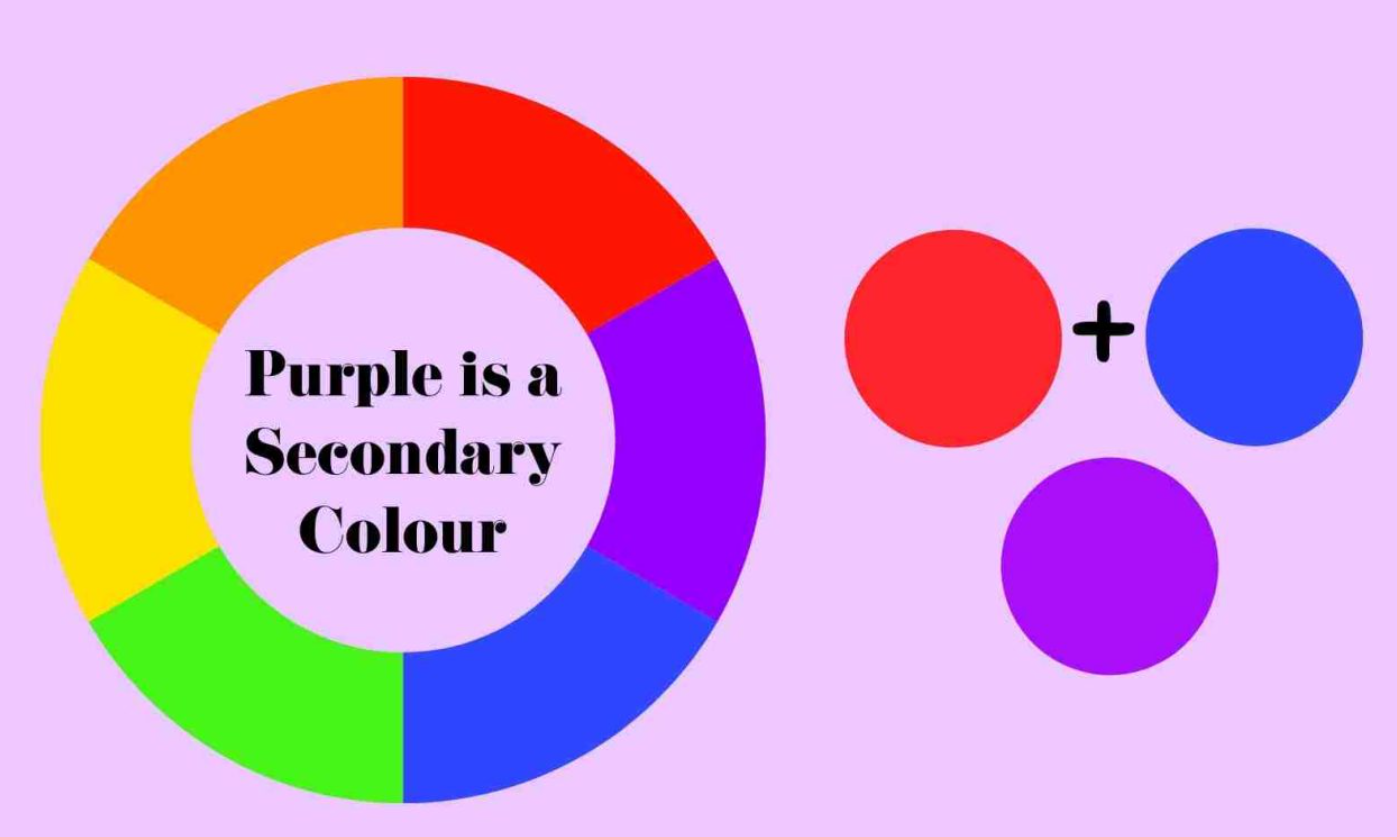
At its most fundamental, purple is made by mixing red and blue. This holds true in traditional subtractive color mixing — the system used with paints, dyes, inks, and pigments. If you combine a red and a blue in roughly equal parts, you’ll get a purple.
But here’s the catch that most beginner guides skip over: not all reds and not all blues are created equal. The specific hues you choose will dramatically change the purple you end up with. This is the single most important concept to understand before you start mixing.
Understanding Color Temperature: The Key to Clean Purples
Every paint color has an underlying color bias — it leans either warm or cool. This matters enormously when making purple.
- Warm reds (like Cadmium Red, Vermilion) contain yellow undertones. When you mix a warm red with blue, the hidden yellow neutralizes the mix, producing a dull, brownish-purple or a muddy gray.
- Cool reds (like Quinacridone Magenta, Alizarin Crimson, or Carmine) lean toward the blue end of the spectrum. These are your best friends for mixing clean, vibrant purple.
- Warm blues (like Ultramarine Blue) have a slight red or violet bias, making them ideal for purple mixing.
- Cool blues (like Phthalo Blue or Cerulean) lean green, which can also muddy your mix.
The winning combination for bright, clean purple: a cool red (like Quinacridone Magenta or Alizarin Crimson) + a warm blue (like Ultramarine Blue). This pairing gives you a vivid, deep purple with no unwanted undertones.
How to Make Purple with Paint (Acrylics, Oils, Watercolors)
Step-by-Step Mixing Instructions
- Start with blue as your base. Blue is the stronger pigment in this pairing. Squeeze a small amount of Ultramarine Blue onto your palette.
- Add red gradually. Using Quinacridone Magenta or Alizarin Crimson, add tiny amounts into the blue and mix thoroughly after each addition.
- Assess and adjust. More red shifts the mix toward a reddish-violet or magenta-purple. More blue shifts it toward an indigo or deep violet.
- Test before committing. Always test your mixed color on a scrap paper or canvas corner before applying it to your work. Colors often dry slightly different from how they look wet.
Adjusting Your Purple
Once you have a base purple, you can manipulate it in several ways:
- To lighten purple: Add white. Be aware this will cool and slightly desaturate the color. Titanium White works well; Zinc White keeps it less chalky.
- To darken purple: Add more blue, or a touch of black — but use black sparingly as it can quickly kill the vibrancy. A dark violet like Dioxazine Purples can deepen without muddying.
- To warm up purple: Add a small amount of red or magenta.
- To cool it down: Add more blue or a hint of violet.
- To desaturate (mute) purple: Add a tiny bit of its complementary color, yellow, to gray it down for more natural, shadowy tones.
How to Make Purple Without Blue
What if you don’t have blue paint on hand? There are a few creative workarounds:
- Magenta + Cyan: In theory, mixing these two primary colors (from the CMY color model used in printing) produces a violet-purple. Results vary by brand and pigment.
- Pre-mixed violet: Dioxazine Purple is a single-pigment paint that gives a reliable, rich purples right out of the tube — no mixing required.
- Layering glazes (for oils/acrylics): Thin red glazes over dried blue layers can optically create a purple effect.
How to Make Purple with Food Coloring
If you’re decorating a cake, making homemade play dough, or dyeing Easter eggs, the same principles apply — but the pigments behave a little differently.
Standard food coloring: Mix red and blue food coloring in a ratio of approximately 1 part red to 3 parts blue. Blue is typically a weaker dye, so you often need more of it than you’d expect. Add drop by drop and mix well before adding more.
Gel food coloring (preferred by bakers) is more concentrated and gives richer, truer purples. Brands like Americolor and Wilton offer “Violet” and “Purple” gel colorings if you want to skip the mixing entirely.
Natural purple food coloring: Blueberry juice, red cabbage juice (which turns blue-purple), and grape juice can all create natural purples for low-stakes projects, though they’re less stable in heat.
How to Make Purple in Digital Design (RGB and Hex)
Digital color works on an additive color model — screens mix light, not pigment. In RGB, colors are created by combining red, green, and blue light values from 0 to 255.
Pure purple in RGB: R: 128, G: 0, B: 128 → Hex: #800080
Unlike paint mixing, digital purple is made by having red and blue light on simultaneously, with green turned off or very low. Here are some useful purples hex codes:
| Name | Hex Code | Character |
|---|---|---|
| Pure Purple | #800080 | Classic, balanced |
| Violet | #EE82EE | Light, soft |
| Indigo | #4B0082 | Dark, rich |
| Lavender | #E6E6FA | Pale, airy |
| Amethyst | #9966CC | Jewel-toned |
| Magenta | #FF00FF | Electric, vivid |
In CSS, you can also write color: purple; directly — most browsers render this as #800080.
How to Make Different Shades of Purple
One of the most common questions alongside “how do I make purple” is “how do I make a specific kind of purple?” Here’s a quick reference:
- Lavender: Purple + a generous amount of white, with a slight blue bias.
- Violet: More blue than red in your mix; brighter and cooler than purples.
- Indigo: Heavily blue-dominant; mix ultramarine with just a touch of magenta.
- Plum: A dark, warm purple with a hint of brown or red; mix purples with a touch of burnt sienna or dark red.
- Mauve: A dusty, muted purple; mix purples with gray and a tiny touch of white.
- Lilac: A very pale, warm purple; mix purples with lots of white and a hint of pink.
Common Mistakes When Making Purple (And How to Fix Them)
Problem: Your purple looks brown or gray. Fix: You likely used a warm red (like Cadmium Red). Switch to a cool red like Quinacridone Magenta or Alizarin Crimson.
Problem: Your purple is too dark. Fix: Add small amounts of white, or start your next mix with less blue.
Problem: Your purple looks pink. Fix: You’ve added too much red. Incrementally add more blue to correct.
Problem: Your purple looks too blue. Fix: Add small amounts of red or magenta until balance is achieved.
Problem: The purple looks different when dry. Fix: Acrylics dry 10–15% darker. Mix slightly lighter than your target value when working with acrylics.
A Quick Summary: How to Make Purple
| Medium | Colors to Use | Ratio |
|---|---|---|
| Acrylics/Oils | Quinacridone Magenta + Ultramarine Blue | 1 part red : 1–2 parts blue |
| Watercolor | Alizarin Crimson + French Ultramarine | Start with blue, add red slowly |
| Food Coloring | Red + Blue | 1 part red : 3 parts blue |
| Digital (RGB) | R: 128, G: 0, B: 128 | Hex: #800080 |
| No blue available | Dioxazine Purple (single pigment) | Use straight from tube |
Final Thoughts
Making purple is a skill that rewards patience and observation. The theory is simple — red plus blue — but the execution depends on understanding your materials, your pigment biases, and your target shade. Whether you’re an artist, baker, designer, or crafter, knowing how to mix a clean, vivid purples gives you enormous creative flexibility.
Start with quality pigments where possible, adjust incrementally, and test before committing. With a little practice, mixing the perfect purples becomes second nature.
