

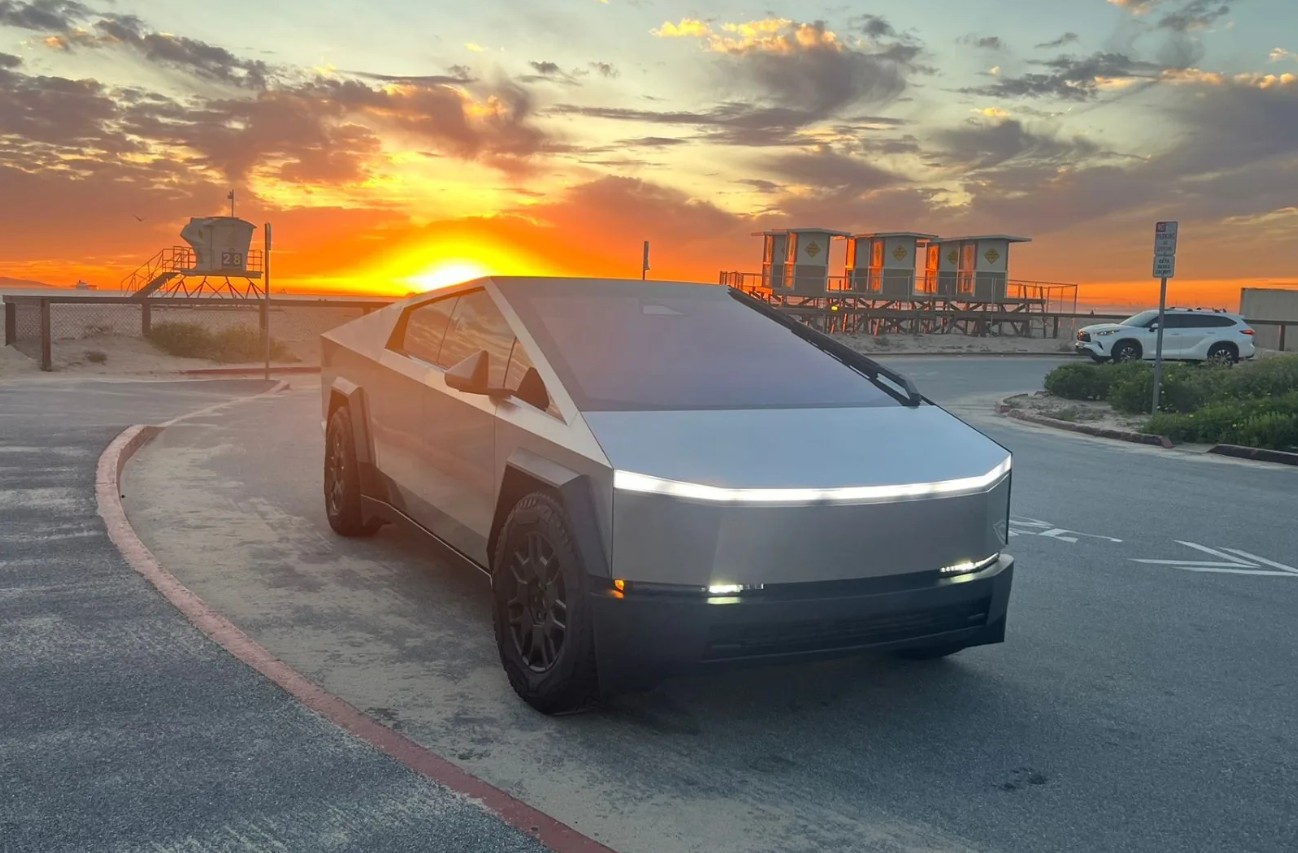
The U.S. Air Force wanted to buy two Tesla Cybertrucks. Not for soldiers. Not for generals to cruise around base. They wanted to shoot missiles at them. Literally park them in the New Mexico desert and fire precision-guided munitions until nothing was left.
And the internet, predictably, lost its mind.
Half the made it sound like the Pentagon was turning into a Tesla dealership. The other half acted like Elon Musk had personally handed over the keys to the military-industrial complex. Neither reading was accurate. But the real story — the one hiding underneath all that noise — is actually more interesting than either of those takes.
Start With the Truck Itself
The Cybertruck is weird. That’s not an insult — it’s the point. When Tesla first showed it off, the angular stainless-steel body looked like something a film student designed for a dystopian short. No curves. No paint. Windows that famously cracked during the live demo. It became a cultural meme before it ever became a product.
But here’s what that design actually means in physical terms: the Cybertruck’s exoskeleton is cold-rolled stainless steel, 30X grade, unpainted and structurally integrated in a way no mainstream vehicle uses. During demonstrations, it took pistol rounds without significant damage to the body panels. Its 48-volt electrical system is years ahead of what most automakers are even testing. The shape — those brutal flat angles — creates a visual and radar signature unlike anything else on the road.
That last part is why the Air Force cared.
A Pentagon market study from February 2025 made the case clearly: no other production vehicle came close to matching that combination of characteristics. And military planners had started asking a question that sounds strange until you think it through — what happens when enemy combatants start using vehicles like this?
It’s not as far-fetched as it sounds. In modern conflicts, opposing forces use whatever is commercially available. Pickup trucks. SUVs. Cargo vans. The Cybertruck is commercially available, increasingly visible globally, and demonstrably harder to damage than conventional vehicles. If you’re a weapons officer trying to understand how a Hellfire missile performs against a target like that, you need actual data. You need to shoot one.
The procurement notice on SAM.gov covered 33 vehicles total. The Cybertruck was the only model listed by brand name. The filing noted they didn’t even need to run — just intact shells with glass and wheels. This was pure ballistics research disguised as a weird truck purchase.
The $400 Million Rumor Deserves Its Own Paragraph
Because a lot of people are still confused about this.
Early in 2025, a State Department procurement forecast mentioned what it called “armored Teslas” — a potential $400 million contract for what many assumed meant armored Cybertrucks for diplomatic security. The story spread fast.
Then the State Department revised the document. Tesla’s name disappeared. It became “armored electric vehicles.” The contract went under review. No confirmed deal followed.
Was Tesla ever seriously in contention? Hard to say. These procurement forecasts are often exploratory — more wish list than commitment. What it did reveal was that the government was actively thinking about electric vehicles for security transport, and Tesla’s name was the first one that came to mind. Whether that becomes anything real is a separate question, and right now the answer appears to be: not yet.
Tesla itself said nothing publicly. The company has been careful about how closely it associates its brand with military contracts — understandably, given its global consumer base.
The Larger Thing Nobody Is Saying Loudly Enough
Here is the part that matters more than either of the stories above.
The Pentagon spent $445 billion on private sector contracts in fiscal year 2024. Out of $755 billion in total federal contracts. That number comes from the Government Accountability Office and it is not a rounding error — it means more than half of all government contracting flows through the Defense Department, and a growing share of that goes to technology companies.
SpaceX alone has pulled in roughly $22 billion in military launch contracts. Starlink, also Musk’s, is providing satellite internet connectivity for Pentagon operations including in conflict zones. In 2025, the Defense Department handed out $200 million contracts each to Google, OpenAI, Anthropic, and xAI for national security AI development — autonomous systems, battlefield analytics, data processing at scale.
Palantir, which most people outside finance and government circles barely know exists, crossed a billion dollars in quarterly revenue on the back of a 10-year, $10 billion Army software deal.
This is not a new development. The Obama administration spent years trying to close the gap between Silicon Valley and the Pentagon, including running a program that brought tech workers into defense roles temporarily. For a long time the valley wasn’t interested — government contracts meant slow procurement timelines, bureaucratic headaches, and margins that didn’t compete with consumer tech.
That calculus has changed. Defense budgets are enormous. The missions — AI, cloud computing, satellite communications, autonomous systems — align directly with what major tech companies already build. And after years of courtship, the door is genuinely wide open.
Gordon Adams, who teaches foreign policy at American University and has tracked defense spending for decades, described what’s happening as a “whole new sector” taking shape. His words on the current moment: the interpenetration of high tech and the Defense Department is “very much now out of control.” He didn’t mean that as praise. But he also didn’t suggest anyone was going to slow it down.
Why a Truck Became the Symbol of All This
The Cybertruck wasn’t supposed to be part of this conversation. Tesla builds electric vehicles for consumers. It doesn’t make weapons It doesn’t hold classified clearances. It has no formal defense division.
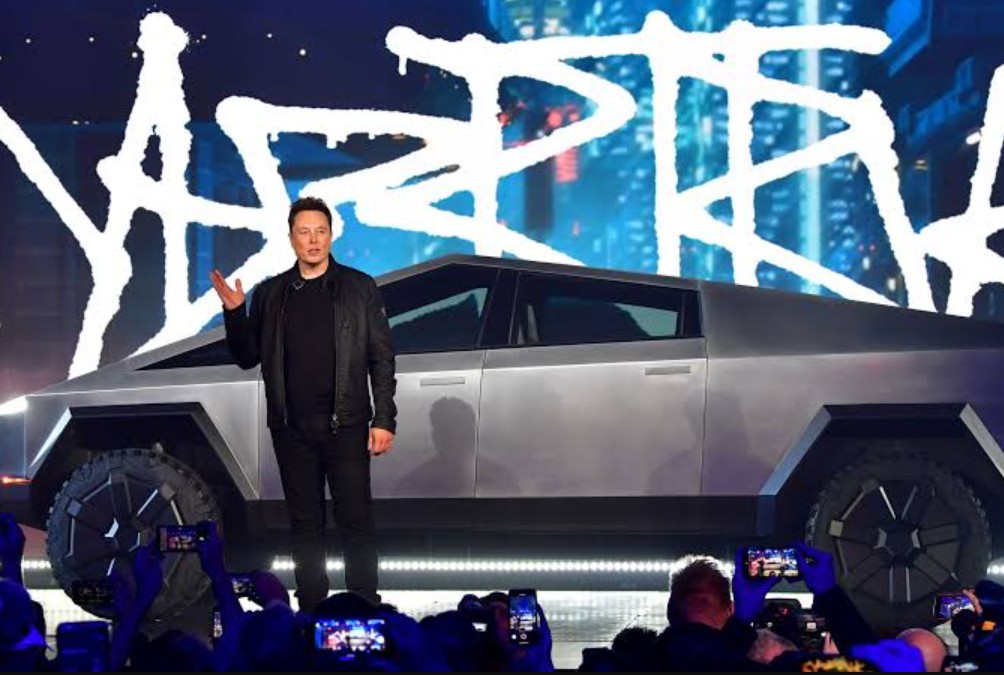
And yet here it is — named in a Pentagon procurement notice, at the center of a $400 million rumor, attached to a conversation about how the U.S. military prepares for future conflicts.
That’s the point. The Cybertruck didn’t enter this story because Tesla sought a government contract. It entered because the Pentagon decided a consumer product had become militarily relevant. That shift — from “interesting civilian technology” to “battlefield consideration” — used to take decades. The procurement cycle alone could outlast the technology itself. Now it’s happening in real time, driven by the speed of commercial innovation and a defense establishment that has learned, somewhat reluctantly, to keep up.
The Problems This Creates
None of this comes without cost or complication.
Cybersecurity is the obvious one. When military decision-making runs through commercial platforms — AI models, cloud infrastructure, satellite networks built by private companies — the attack surface expands dramatically. A vulnerability in a consumer product becomes a potential vulnerability in a classified environment. That’s not hypothetical. It’s an active concern at every level of the defense establishment.
There’s also the question of dependence. The more the Pentagon relies on a handful of technology firms, the more leverage those firms accumulate. Pricing, contract terms, product roadmaps — all of it starts to matter for national security in ways that traditional defense contracting never faced.
And then there’s the human judgment problem. AI can accelerate decision-making in war. It can also be wrong in ways that aren’t caught until it’s too late. The technology does not come with built-in accountability. Command structures do. How those two things coexist in a battlefield context is a question nobody has fully answered.
Congress noticed. By late 2025, legislators were openly discussing Tesla’s military-adjacent contracts and whether Musk’s various government relationships — contractor, informal advisor, business partner to federal agencies — created conflicts that the public had a right to examine. Those conversations haven’t produced resolution. They probably won’t anytime soon.
What Comes Next
Honest answer: more of the same, probably at greater speed.
AI contracts will grow. Electric vehicle research within the military will expand, even if the Cybertruck itself never becomes standard equipment. The debate over where private technology ends and national security begins will continue without clean resolution.
What won’t change is the underlying dynamic. The Pentagon has decided that commercial technology is essential to military advantage. Big Tech has decided that defense contracts are worth pursuing. And the civilian products being built in California garages and corporate campuses are ending up — sometimes literally — in the middle of weapons-testing programs in the desert.
That is a genuinely new thing. Not just politically or economically. Structurally. The way America prepares for war has changed, and a stainless-steel truck getting turned into a missile target is, in its own strange way, the clearest sign of that.
