

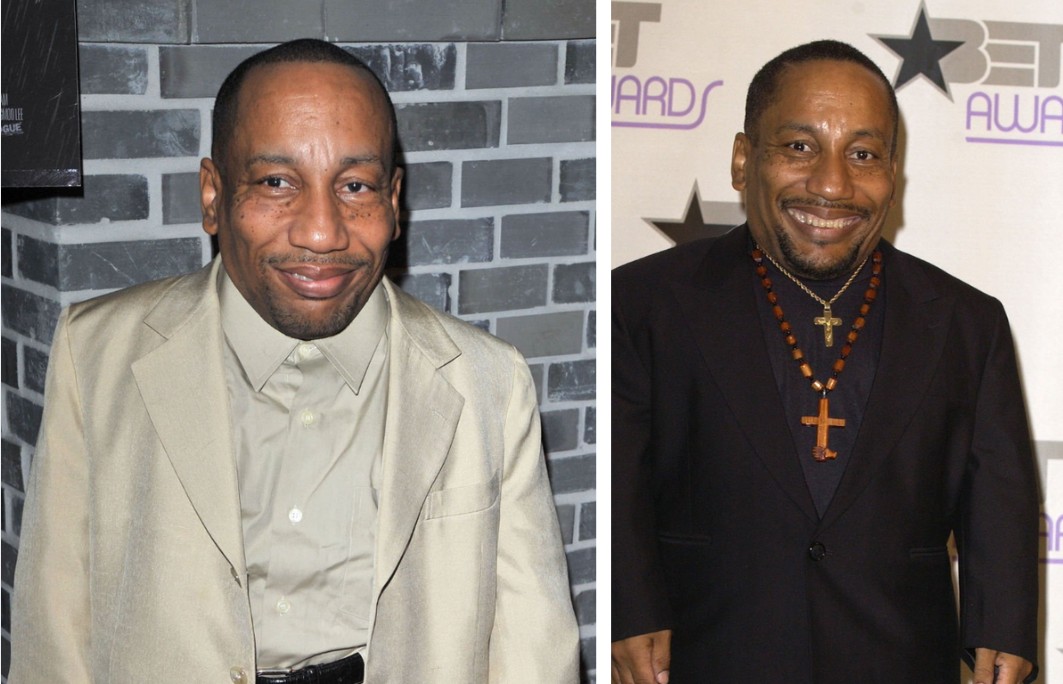
Tony Cox is one of Hollywood’s most recognizable character actors — a performer whose four-decade career stands as both an entertainment milestone and a testament to the power of persistence. Born Joseph Anthony Cox on March 31, 1958, in Uniontown, Alabama, Cox overcame industry stereotypes, limited opportunities, and personal adversity to carve out an enduring legacy on screen. Whether you know him as the sharp-tongued Marcus from Bad Santa, the furry Ewok from Return of the Jedi, or the quirky preacher in Tim Burton’s Beetlejuice, Tony Cox has left an indelible mark on American cinema.
Early Life and the Spark of a Dream
Cox was born in New York City but raised in the small town of Uniontown, Alabama, by his grandparents, Lottie and Henry Jones. Growing up in the Deep South as a little person — Cox stands 3 feet 6 inches tall — he encountered obstacles that would have discouraged many. But even as a child, he was drawn to the stage. By age 10, he had become a passionate drummer, and music became one of his earliest creative outlets.
The defining turning point came when a young Cox encountered Billy Barty, the legendary actor and founder of Little People of America. Barty’s ability to command the screen and build a real career inspired Cox to believe he could do the same. After graduating from Robert C. Hatch High School in 1976 and briefly attending Alabama State University, Cox moved to Los Angeles at age 18 to pursue acting.
Once in Hollywood, he enrolled at the Merrick Studio School of Acting under instructor De De Tillman, studying the craft seriously rather than simply hoping to get lucky. That discipline would prove essential in the years ahead.
The Early Career: Building a Foundation
Tony Cox’s on-screen debut came in 1980 with Dr. Heckyl and Mr. Hype, followed by a stream of small roles in commercials, television, and film throughout the early 1980s. These roles were not always flattering — in the TV series The Greatest American Hero, he was credited simply as “Circus Dwarf,” a reminder of how Hollywood often reduced little people to props rather than performers.
Despite these setbacks, Cox pressed forward. In 1981, he appeared alongside his idol Billy Barty in Under the Rainbow, a period comedy that gave him his first taste of working on a major studio production. Then, in 1983, came his biggest break to that point: a role in Star Wars: Episode VI — Return of the Jedi, where Cox suited up to play Widdle “Willy” Warrick, one of the Ewoks. While he was hidden beneath fur and prosthetics, the experience placed him on one of the most famous movie sets in history and opened new doors in the industry.
The late 1980s brought further visibility. Cox appeared in Spaceballs (1987), Mel Brooks’s beloved sci-fi parody, and as the preacher in Tim Burton’s Beetlejuice (1988), where his natural timing and screen presence shone through a small but memorable role. These performances solidified his reputation as a reliable, versatile actor in fantasy and comedy productions.
Bad Santa: The Role That Changed Everything
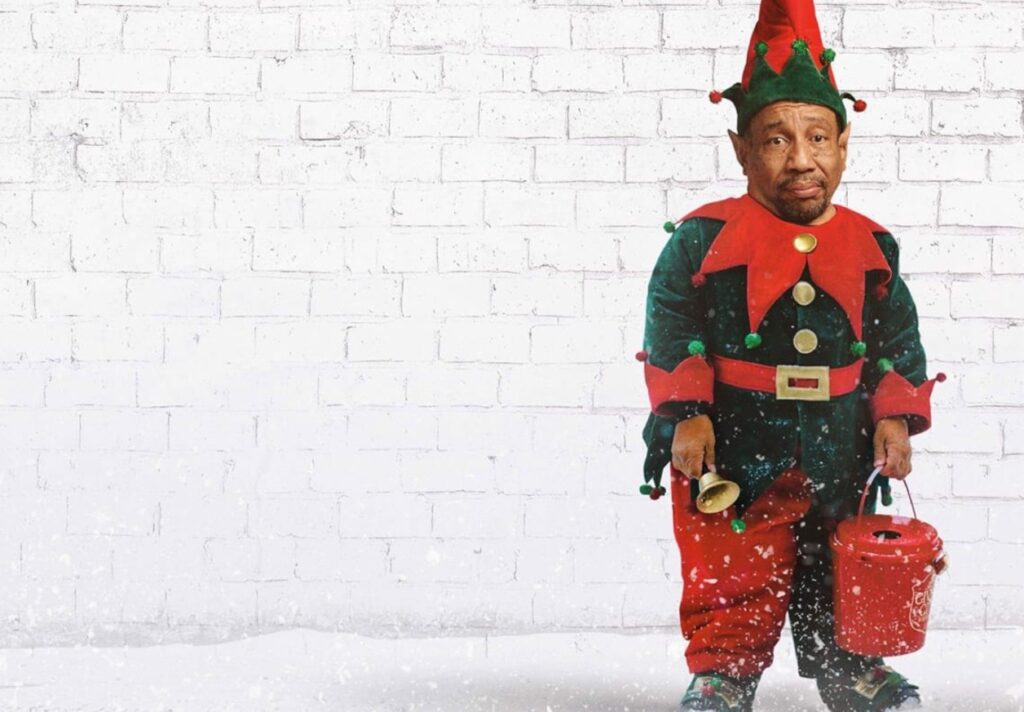
If there is one film that defines Tony Cox’s career, it is Bad Santa (2003). Directed by Terry Zwigoff and co-starring Billy Bob Thornton and Bernie Mac, the dark holiday comedy gave Cox the role of Marcus Skidmore — a sharp, calculating mastermind who orchestrates elaborate mall heists disguised as a Santa’s helper. Marcus was not a sidekick or comic relief. He was a fully realized character with intelligence, menace, and wit.
Cox has spoken candidly about how much the role meant to him. “In 23 years working as an actor at that time, I had never seen a role like that,” he said in a 2023 interview. “Those are roles you dream of.” He prayed through multiple audition rounds, and with the support of director Zwigoff and co-star Thornton, he won the part.
The gamble paid off enormously. Bad Santa became both a critical and commercial success, earning a cult following that endures to this day. Cox’s chemistry with Thornton drew widespread praise, with critics noting how the two actors balanced each other perfectly — Thornton’s chaotic, self-destructive Willie against Cox’s calculated, cold-blooded Marcus. It was, as Cox himself noted, an overnight success more than two decades in the making. Cox reprised the role in Bad Santa 2 (2016), giving Marcus a second chapter and bringing the character full circle.
A Career of Remarkable Range
Beyond Bad Santa, Tony Cox’s filmography is surprisingly diverse. He appeared in Ice Cube’s Friday (1995), the Farrelly Brothers’ Me, Myself & Irene (2000), and a string of popular parody films including Date Movie (2006), Epic Movie (2007), and Disaster Movie (2008). In Oz the Great and Powerful (2013), he played Knuck, a loyal Emerald City citizen, in a major Sam Raimi fantasy production.
On television, Cox made memorable appearances in shows including Martin, The Jamie Foxx Show, and Frasier. He even appeared in music videos, including Tupac Shakur’s iconic “California Love” and an Eminem video — demonstrating a cultural reach that extended well beyond Hollywood.
Over the course of his career, Cox accumulated more than 90 on-screen credits, a remarkable body of work for any actor, and particularly significant for an African-American performer of short stature working in an industry that offered few such opportunities.
Legacy and Impact on Representation
Tony Cox’s significance in Hollywood extends far beyond his individual performances. He is widely regarded as a pioneer for little people in mainstream American entertainment — specifically as one of the very few Black actors with dwarfism to achieve consistent, mainstream success.
His advocacy has not always been loud, but it has been consistent. Cox has supported Little People of America and has used his platform to highlight the limited and often demeaning roles available to performers of short stature. His portrayal of Marcus in Bad Santa is considered a landmark moment in the representation of little people on screen: a character defined by intelligence and agency rather than novelty.
The evolution of Cox’s roles over the decades — from anonymous Ewok costumes to leading a heist operation in a major studio film — mirrors a broader, if still incomplete, shift in how Hollywood approaches actors with physical differences.
Personal Life and Retirement
Away from the camera, Tony Cox has maintained a grounded, faith-centered life. He met his wife, Otelia, during high school in Alabama, and the couple married in 1981. Their relationship has been a cornerstone of his life through decades of professional ups and downs — Otelia was by his side as he prayed and auditioned for the Bad Santa role, and their partnership has endured for over four decades.
Following Bad Santa 2 and subsequent hip surgery, Cox announced in a 2023 interview that he had stepped away from acting. Retirement from a career that spanned more than 35 years marks the close of a chapter, but his legacy remains very much alive in the films, performances, and conversations about representation he helped shape.
Why Tony Cox Still Matters
Tony Cox’s story is about more than the movies he appeared in. It is about an actor from a small Alabama town who refused to accept that the entertainment industry’s narrow vision of what he could be was the final word. He pursued formal training, weathered decades of limited and sometimes demeaning work, and ultimately delivered performances — particularly as Marcus in Bad Santa — that are studied, celebrated, and rewatched by new generations of viewers.
For anyone interested in the history of representation in Hollywood, the evolution of character acting, or simply the career of a performer who made the most of every opportunity given to him, Tony Cox is an essential figure. His journey from Uniontown to the silver screen is one of the most compelling stories in American cinema.
